1840
Born in Paris
The Beginning of a Painter’s Life
Claude Monet is born in Paris.
Discover Monet’s life,
his sources of inspiration and the development
of his distinctive artistic vision.
Claude Monet was one of the leading figures of Impressionism. His artistic journey took him from his early plein-air studies in Normandy to the landscapes of Argenteuil and the emergence of Impressionism, before leading him to his great series of paintings and the Water Lilies of Giverny.
At the heart of his work lies one recurring question:
How does the world change as the light changes?
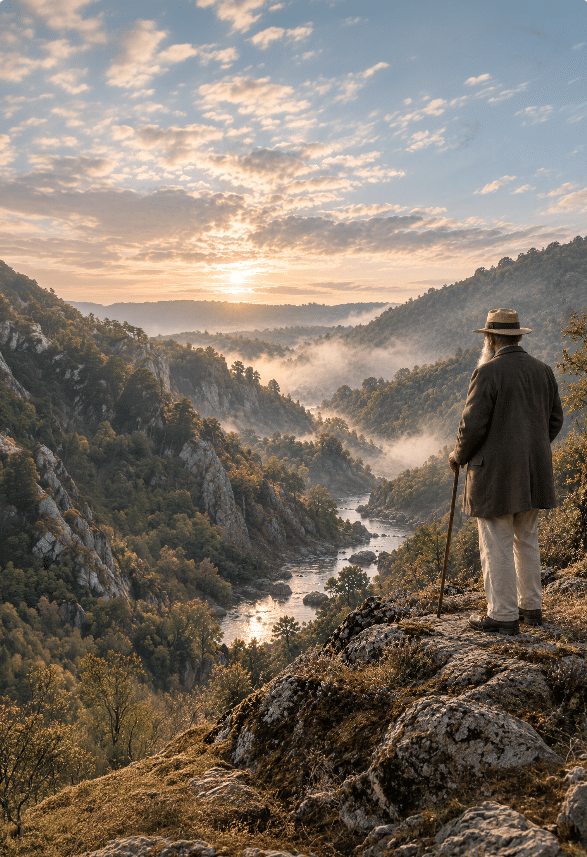
Claude Monet is born in Paris.
In Le Havre, Monet developed an early fascination with nature, the sea and light.
Begins His Formal Artistic Training: In Paris, Monet embarks on his career as a professional painter and immerses himself in the world of painting.
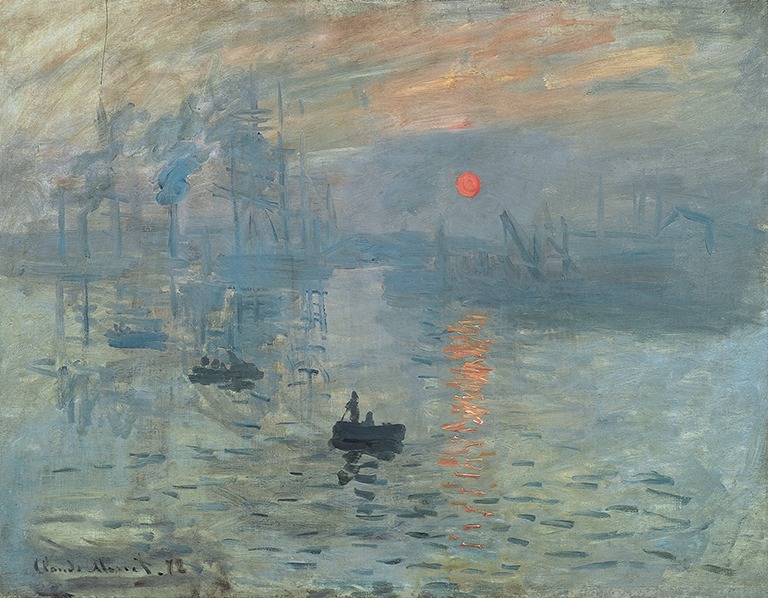
Impression, soleil levant Gives the new art movement its name.
Giverny becomes the centre of Monet’s life and later the setting for his famous garden paintings.
In Fresselines, the landscape becomes a testing ground for light, atmosphere and the concept of the series.
Claude Monet dies in Giverny on 5 December.
Looking Outwards
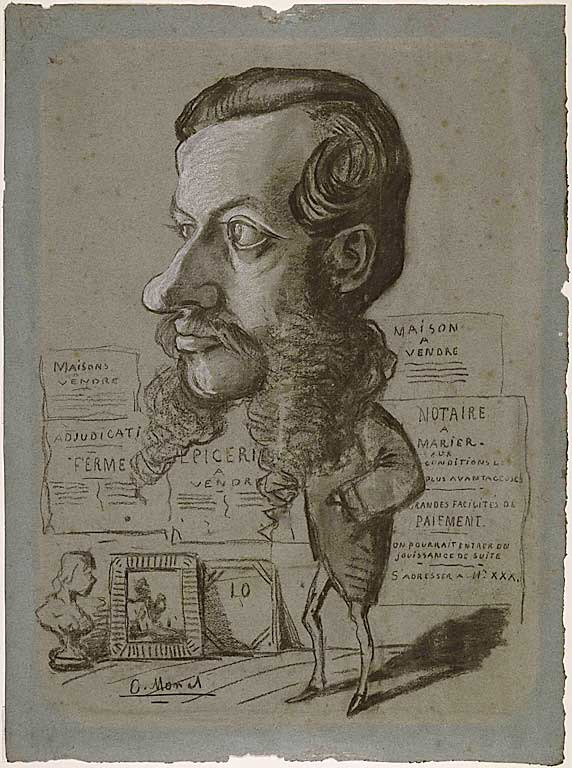
Claude Monet was born in Paris in 1840 and grew up in Le Havre from the age of five. There, he attended the municipal secondary school from 1851 to 1857, where he received drawing lessons from Jacques-François Ochard. However, he was never particularly fond of academic discipline, much preferring to spend his time on the cliffs and by the sea. Even as a teenager, he developed a talent for caricature, becoming well known for his drawings in Le Havre. His work was displayed in the shop window of a local picture framer, and before long, at just fifteen, he was already receiving his first commissions.
In the same shop window, he also encounters the seascapes of the painter Eugène Boudin. At first, Monet is not particularly impressed by his paintings. It is only when the picture framer introduces the two men that Monet’s perception of painting begins to change. Boudin recognises Monet’s talent but encourages him to look beyond caricature and to observe and paint landscapes directly from nature, working outdoors in front of his subject.
Through this experience, Monet discovered an approach that would prove fundamental to his later work: capturing landscapes not from memory, but directly on location, in changing light and through first-hand engagement with nature.
From an early age, nature becomes more than just a subject for Monet – it becomes the very starting point of his art.
The Birth of Modern Painting
From an early stage, Monet sought a form of painting that broke free from the conventions of academic art. Rather than depicting landscapes as accurately and permanently as possible, he became increasingly interested in capturing the fleeting impression of a moment: light, colour, atmosphere and movement.
During the 1860s, he worked alongside artists such as Renoir, Sisley and Bazille. Together, they developed a new approach to painting, guided more by direct observation than by the traditional rules of the Academy.
In 1872, one of the paintings that most clearly illustrates this development was created in Le Havre: Impression, soleil levant (Impression, Sunrise). Monet painted the harbour early in the morning from a hotel window. In just a few hours, he captured the atmosphere of the harbour, the soft, diffused light and the rising sun with loose, visible brushstrokes. Rather than depicting the scene as accurately as possible, his aim was to capture the fleeting impression of that single moment.
Two years later, Monet exhibited the painting in the first independent exhibition organised by a group of artists whose works had frequently been rejected by the official Paris Salon. Their unconventional, sketch-like style provoked ridicule and fierce criticism. Monet’s painting, in particular, became the focus of the controversy. The critic Louis Leroy seized on the painting’s title and, in a scathing newspaper article, dubbed the exhibiting artists “Impressionists”. What began as a derogatory label soon became the name of a new art movement.
The Landscape Becomes Monet’s Testing Ground
The turn towards painting outdoors and direct observation is a prime example of the transformation of European painting in the late nineteenth century. Plein-air painting places the fleeting moment, changing light and perception itself at the heart of the artistic process. Rather than striving to reproduce a subject as accurately as possible, the focus shifts to how a particular moment is actually seen and captured in paint.
This influence extended far beyond France, shaping subsequent generations of artists working in an Impressionist style across Europe. In Germany, for example, August Deusser and Max Liebermann turned to plein-air painting influenced by Impressionism in the early twentieth century.
As the Landscape Grew Wilder
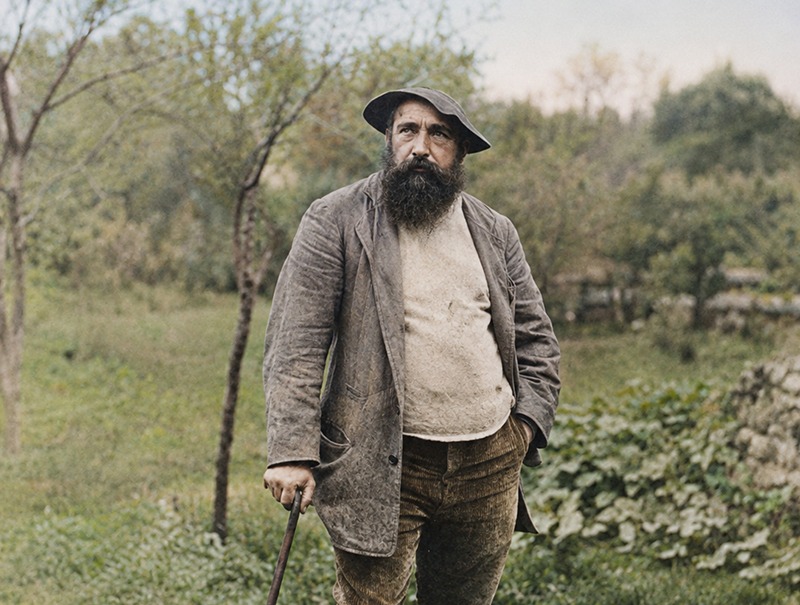
In 1889, Monet’s search for new subjects took him to the Creuse Valley. He arrived in Fresselines in March, where his friend, the poet Maurice Rollinat, introduced him to a landscape very different from the familiar scenes along the Seine.
Deep gorges, granite rocks, rushing rapids, ancient trees and ever-changing light define the character of the region. Monet was fascinated by this landscape and later described its untamed natural power as a “terrible sauvagerie” – a terrible wildness.
A New Subject and a New Approach
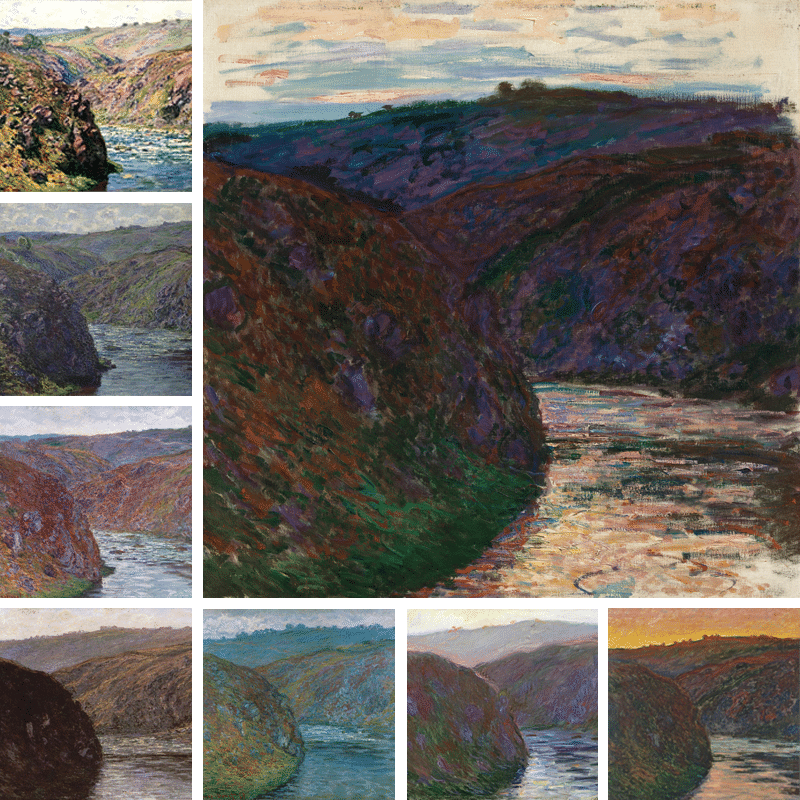
Monet repeatedly returned to the same vantage points, observing the landscape at different times of day and under changing weather conditions. Even changes in the vegetation mattered to him: when young leaves began to alter his view of the gorge, he had them removed so that he could preserve his chosen composition.
His aim was not simply to depict the landscape as beautifully or faithfully as possible. Rather, the different views and changing light conditions became a testing ground for exploring perception. The familiar subject remained the same, allowing him to observe more clearly how light, atmosphere and the passage of time transformed it.
Between March and May 1889, Monet created 24 paintings during his stay in the Creuse. Within this body of work, a sequence of ten paintings depicting the same subject forms a particular focus. The landscape becomes a stage for continuous transformation: the focus is no longer on the subject itself, but on how it changes as light, weather and atmosphere shift.
Ravin de la Creuse • W 1227
Within this group of works, Ravin de la Creuse brings the ten-painting sequence featured in our presentation to a close.
The Landscape Remains – the Light Tells the Story of Its Changing Moods.
When the Same Subject Is Never the Same
For Monet, the Creuse is more than just a new landscape. It becomes an artistic experiment. He observes the same subject under different conditions, increasingly shifting the focus of his painting from the question “What do I see?” to the question:
“How does it appear now?”
The time of day, weather, season, light and atmosphere all transform the appearance of the same landscape. This very principle would become a central part of Monet’s artistic approach in the years that followed.
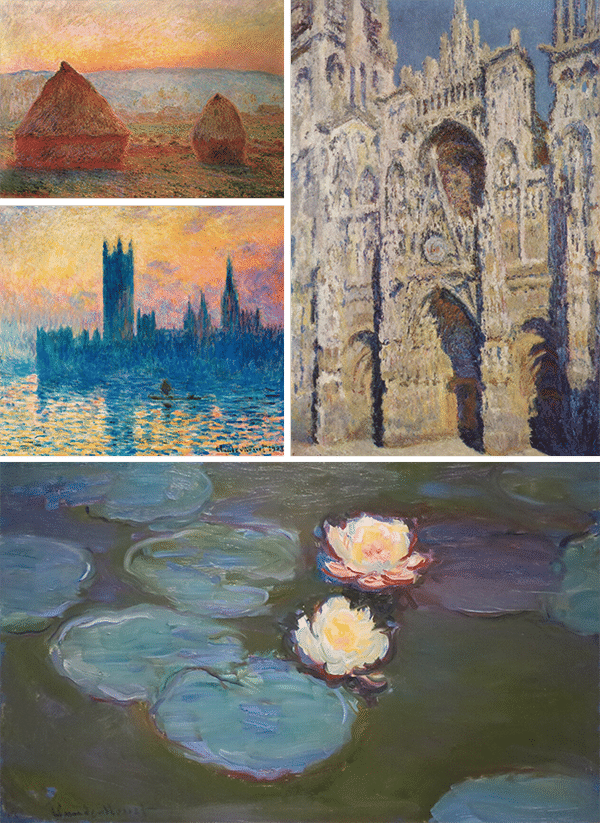
The Creuse series can thus be seen as an important step towards the great series of paintings that followed: the Haystacks, the Poplars, Rouen Cathedral, the views of the Houses of Parliament in London and, ultimately, the Water Lilies.
One Subject. Many Moments.
A Landscape That Reinvents Itself Time and Again.
The Idea Becomes a Principle
What becomes increasingly apparent in the Creuse is an approach that Monet would continue to develop in the years that followed. He chooses a subject that remains largely unchanged and explores how its appearance is transformed by different light and weather conditions.
Haystacks
What appears to be a simple subject becomes a study of the seasons, time of day and light.
Water Lilies
From the late 1890s onwards, Monet devoted himself for decades to the Nymphéas cycle – his Water Lilies. Water, plants, reflections, sky and light increasingly merge into a form of painting in which the boundaries between individual elements begin to dissolve.
Rouen Cathedral
The façade becomes an almost abstract canvas for light and colour.
London
In his views of the Houses of Parliament, Monet was similarly less interested in architectural accuracy than in the atmosphere created by light and fog.
The development of these series shows how the observation of landscape evolved into a systematic artistic principle. Monet had already revisited individual scenes in his earlier work; in his series, he pursued this approach with ever greater consistency.
It is not the subject that remains constant, but its transformation.
From a Landscape Motif to a World of His Own
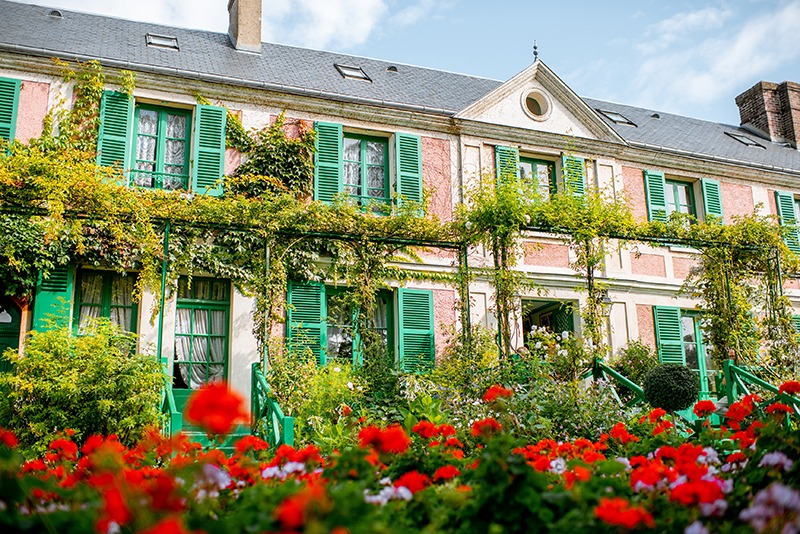
In 1883, Claude Monet settled in Giverny, finding a place where his life and art would become increasingly intertwined. Together with Alice Hoschedé and their large blended family, the house became the centre of his life. Eight children lived under one roof, while friends and fellow artists were regular visitors. Giverny was therefore not merely a place to live, but also a vibrant hub of exchange and inspiration.
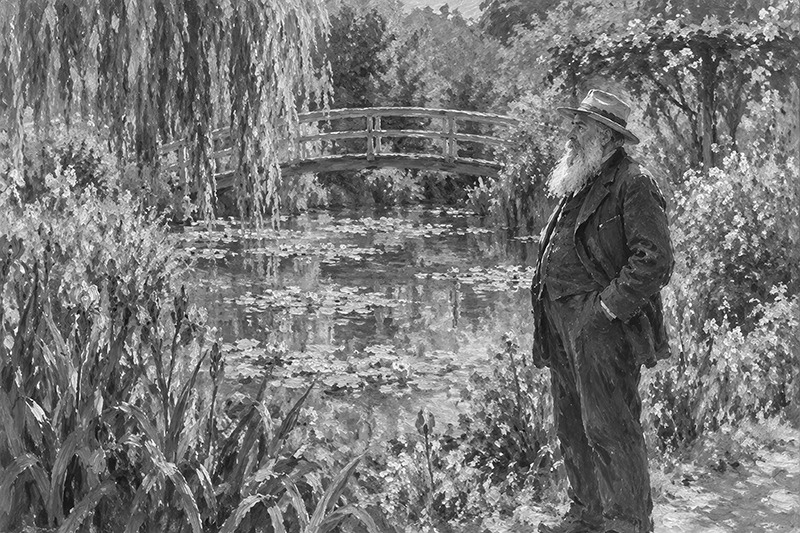
Above all, however, this is where Monet begins to create a landscape of his own. He carefully shapes his garden according to his own vision, transforming it into a work of art in its own right – one that is constantly changing. With the water garden and lily pond he created later, Monet developed a subject that he could shape himself while observing it anew time and again.
In this way, his garden becomes a unique kind of studio. Monet no longer needs to search for a subject – he has created a world of his own, one he can observe right on his doorstep. The changing seasons, shifting light, reflections on the water and the growth of the plants ensure that this world appears different time and again.
This interplay between nature and artistic design gave rise to some of Monet’s best-known works. In the Nymphéas (Water Lilies) series, the garden itself ultimately becomes the subject of an increasingly free approach to painting, in which the landscape gradually dissolves into colour, light and reflection.
The End of a Life – Not the End of the Idea
Claude Monet dies in Giverny on 5 December 1926, aged 86.
Until the very end, Monet remained devoted to his painting, particularly to his monumental Water Lilies cycle. The large panels, which he donated to the French state, were installed just a few months after his death in the Orangerie in Paris, a gallery specially designed to house them.
Monet leaves behind no fixed image of the world. He leaves behind a new way of seeing it.
2026 is a special year for Monet, marking the centenary of his death.
From the wild landscapes of the Creuse to the Water Lilies of Giverny, one idea runs throughout Monet’s work:
Light transforms a familiar subject
into a new moment, time and again.
Ravin de la Creuse

SERVICE
LEGAL INFORMATION
Copyright 2026 by red shark advertising GmbH

