
Between Berry and Limousin, the rivers of the Creuse carve their way through a landscape of granite, gorges and water.
This distinctive interplay of nature and ever-changing light made the region an important source of inspiration for artists, drawing
Claude Monet to Fresselines in 1889.
Where the Landscape Becomes a Source of Inspiration
Amid rivers, rocky outcrops and wooded slopes lies a landscape that captivated Claude Monet for weeks in the spring of 1889.
Yet Monet was not the first to find inspiration here. Decades earlier, artists had already discovered the wild gorges of the Creuse. From the mid-nineteenth century onwards, the railway made this remote region considerably easier to reach, turning what had once been an arduous journey into an accessible destination for painters in search of new landscapes.
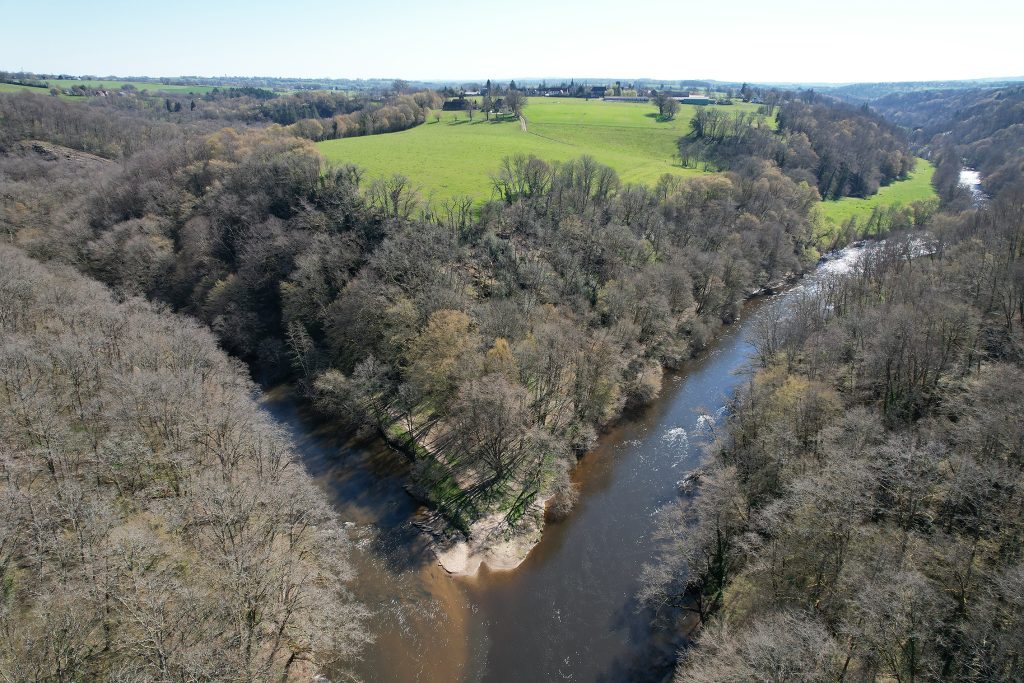
Granite Outcrops
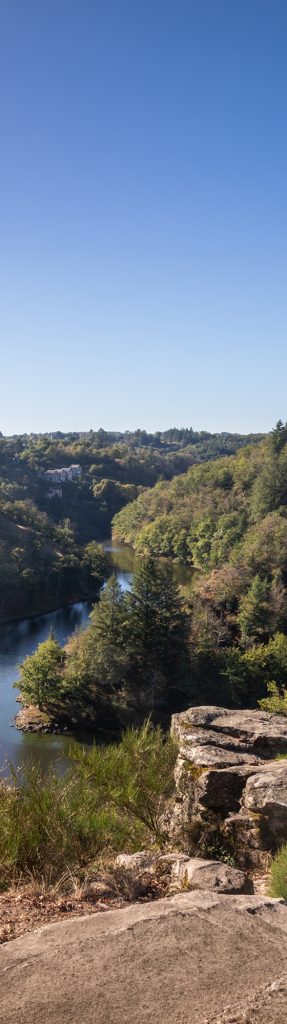
Wooded Slopes
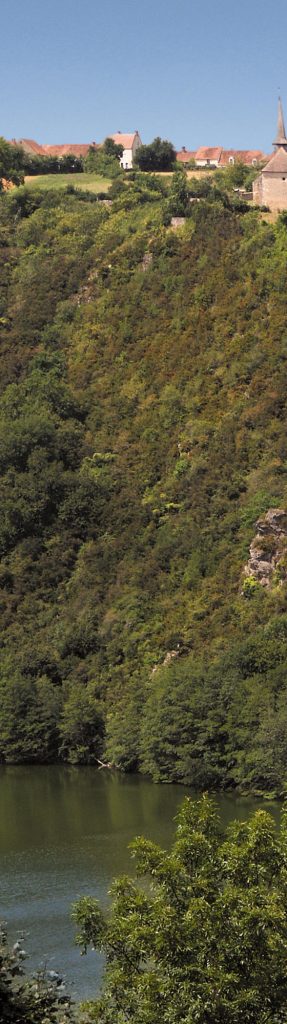
Flowing Water
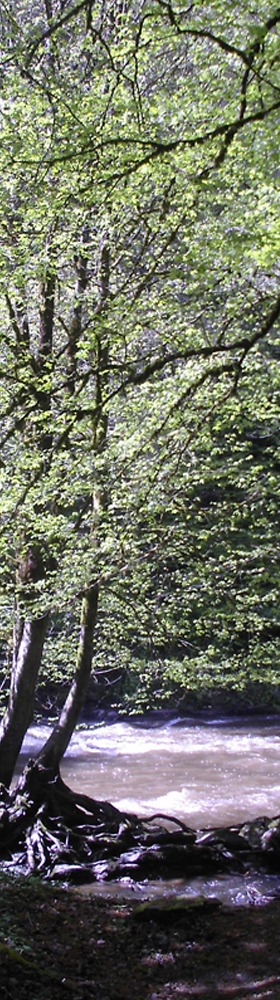
Water. Rocks. Light.
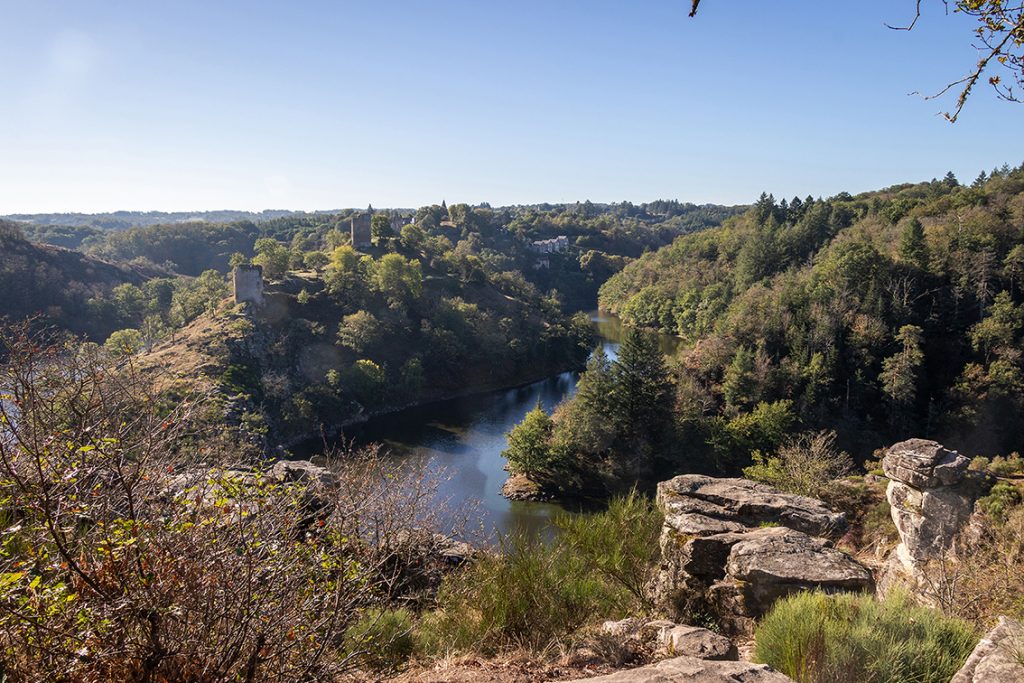
The Grande Creuse and Petite Creuse flow through the landscape, meeting at Fresselines. Over time, the water has carved deep into the granite, shaping gorges, rocky outcrops and steep slopes. Between them lie woodlands, meadows and old paths, each offering new views across the valley.
t is a landscape that is difficult to capture in a single image. The water is constantly moving, clouds drift across the rocks, mist rises from the gorges and light travels across the slopes. What appears cool and grey in the morning may glow in warm shades of ochre, pink and violet just a few hours later.
For Monet, the unique quality of this landscape lay in its constant state of change. Sunshine and clouds, rain and mist, morning and evening light could transform the very same place into an entirely different scene in a matter of moments.
During his stay, Monet was therefore not simply painting a single subject. He was observing how it changed.
Perhaps this is precisely what makes the Creuse so fascinating: it is not a static landscape, but one that seems to constantly elude the painter.
The Place Where Monet Painted
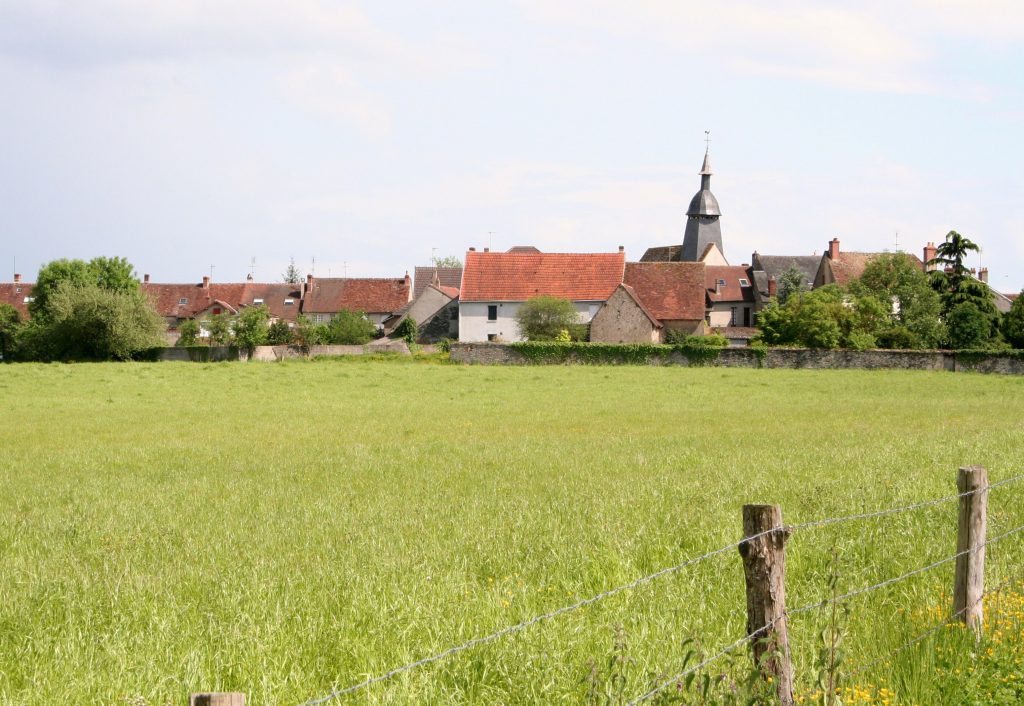
Fresselines was the starting point of Monet’s stay in the Creuse. He arrived here in March 1889 and remained for around three months. His friend, the poet Maurice Rollinat, lived nearby and familiarised Monet with the surrounding landscape.
From Fresselines, Monet made his way to the riverbanks and viewpoints around the confluence of the Grande Creuse and Petite Creuse.
Here, the landscape became Monet’s workplace. No comfortable studio, no sheltered space – just rocks, water, wind and ever-changing weather.
And Monet faced this landscape with remarkable determination. The Art Institute of Chicago reports that he suffered from colds, cramps, painful, cracked hands that had to be protected with gelatine-lined gloves, as well as back pain and severe exhaustion.
Despite these hardships, he continued to paint. For twelve weeks, he repeatedly returned to his subjects. Shortly before leaving, he wrote to Alice Hoschedé that she would never know what he had endured during this painting expedition – he was “at the end of his strength”.
This makes the Creuse series all the more tangible: behind the seemingly effortless washes of colour lies a physically and artistically demanding working process.
Today, the Espace Monet-Rollinat commemorates the painter’s stay and preserves the artistic heritage of the area. A circular walking trail, „Dans les pas de Monet“ , also leads visitors through the landscapes that captivated him in 1889.
One Landscape – Many Moments
Monet’s stay in the Creuse gave rise to an extensive body of work. Over the course of around twelve weeks, he created 24 canvases, which are now scattered across museums and private collections around the world.
Some of these works focus particularly on the confluence of the Grande Creuse and Petite Creuse. Other subjects take us further into the surrounding landscape. Together, they reveal just how intensely Monet observed this place.
The paintings do not form a collection of unrelated landscapes. Time and again, Monet returns to the same stretches of river, rocks and slopes.
What Changes Is the Perspective.
At times, the landscape is bathed in bright sunlight; at others, it lies beneath a grey sky. The water reflects warm colours or almost disappears into the dark tones of the gorge.
This makes it clear that Monet was never interested in simply recording the topography of a place. He did not merely want to show what the Creuse looked like. He wanted to capture how it felt and changed at a particular moment in time. It is precisely this interplay that makes the Creuse paintings so fascinating: viewed together, they tell the story of a landscape that transforms with every passing moment.
Where the Landscape Becomes Magical
The Creuse has inspired more than just artists. Over the centuries, stories of ghosts, fairies and mysterious creatures have emerged around its rocks, rivers and ruins.
The Ruins of Crozant
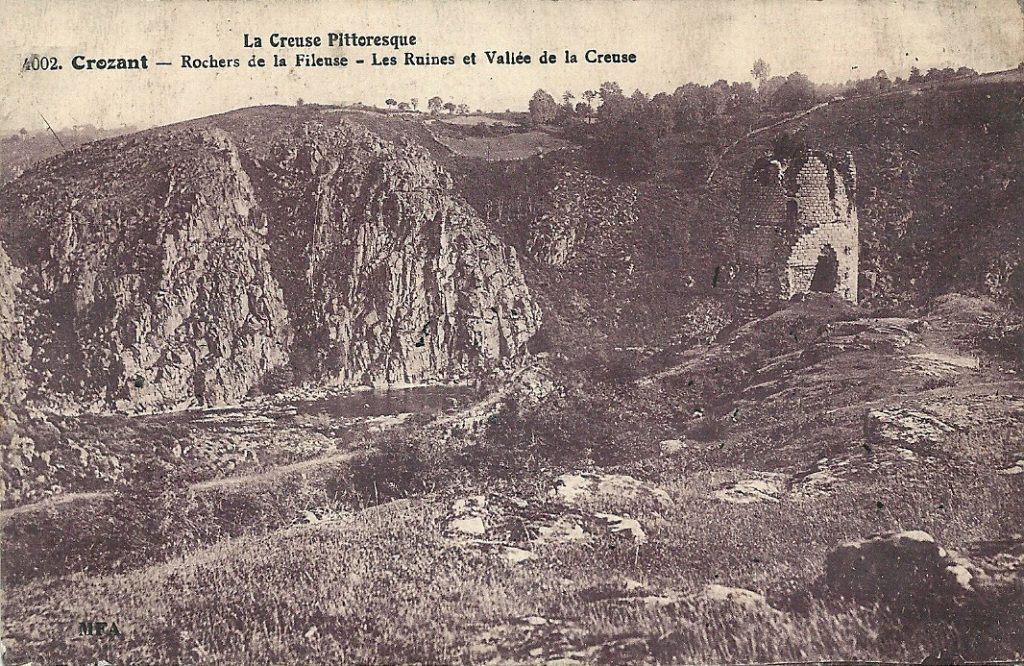
The medieval ruins of Crozant are among the most striking landmarks of the valley. In local tales, they are portrayed as a place where the past has never entirely faded: ghostly figures are said to wander among the ancient walls at night, while the spirits of former castle lords watch over the ruins.
The Water Spirits of the Creuse
At the confluence of the two Creuse rivers, the roaring waters were once seen as more than a force of nature. Fishermen told tales of water spirits that lived in the whirlpools and could lure travellers into the depths with their haunting roar.
Fairies in the Gorge
In local folklore, the gorge of the Petite Creuse was believed to be a realm of fairies and woodland spirits. The sudden appearance of mist was seen as a sign of an unseen world hidden between water and forest.
The Wolf of Limousin
The forests of the region are steeped in legends, too. Tales of the “Loup du Limousin” – a mythical wolf – tell of a creature that frightened travellers and embodied the darker side of the landscape.
Such traditions are part of the regional folklore of the Creuse and belong to a much wider collection of stories about fairies, ghosts, wolves and other mythical creatures.
Perhaps a landscape like this needs no legends at all. Perhaps they arise all on their own.
After all, the landscape itself is dramatic enough: deep gorges, roaring waters, mist drifting between the rocks and ruins overlooking the valley.
IN MONET’S FOOTSTEPS
The Creuse is a landscape of contrasts, with rivers, gorges, rocky outcrops, forests and ever-changing light. Much has changed since 1889, but the places where Monet painted remain part of the landscape to this day.
Discover the places where Monet found his subjects. Our interactive map guides you to the locations of Monet’s works throughout the region.
Zoom in on the valley and follow Monet from one location to the next. At each marked location, you can discover:
The Painting
Which painting was created here?
The Place
Where Exactly Was Monet Standing?
The Story
What Made This Location So Interesting to Him?
What was already accessible to Monet in 1889 had been considerably more difficult to reach just a few decades earlier. The arrival of the railway in 1856 gradually made the valley more accessible to travellers and artists alike.
What Did Monet See?
In 1889, Monet stood with his easel, paints and canvas amid a landscape that has since changed.
The rivers continue to flow. The rocks remain. Trees have grown, paths have changed, and some views look different today.
Yet when Monet’s paintings are compared with the landscape as it appears today, surprising similarities can still be found. The works do not form a collection of unrelated landscapes. Time and again, Monet returned to the same stretches of river, rocks and slopes.
What Changes Is the Perspective.
At times, the landscape is bathed in bright sunlight; at others, it lies beneath a grey sky. The water reflects warm colours or almost disappears into the dark tones of the gorge.
It is precisely this juxtaposition that makes the Creuse paintings so fascinating: viewed together, they tell the story of a landscape that changes with every passing moment.
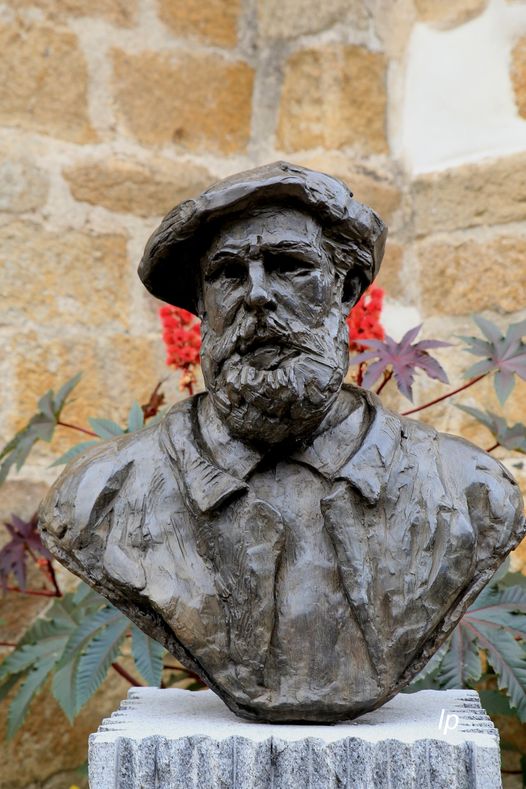
Monet’s presence can still be seen in the heart of Fresselines today. The sculptor Danielle Bertholdt created a bronze bust of the painter, which was unveiled in 2020 beside the Church of Saint-Julien. It commemorates Monet’s time in the Creuse and the close connection between the village and his artistic work. Here, visitors encounter Monet not only through his paintings, but also in the heart of the village as it is today.
Claude Monet came to the Creuse for a few months in 1889.
He left behind 24 canvases and a distinctive way of seeing this landscape. His paintings reveal more than rocks, water and forests. They show how a place is transformed by light, weather and the passage of time.
Today, you can still see the same rivers and gorges that inspired Monet’s paintings.
Only the light is different.
Yet perhaps this is the true story of the Creuse: a landscape that artists have returned to for generations, yet one that never reveals the same view twice.
SERVICE
LEGAL INFORMATION
Copyright 2026 by red shark advertising GmbH

